
After more than seven years of analyzing clients online, this is still one of the questions I receive most often.
And I understand why.
Today, you can book an in-person color analysis, submit photos to a professional color analyst online, order a service through a marketplace, use an app, or take an automated quiz.
They may all be called color analysis, but the experience, methodology, and expertise behind them can be completely different.
So when someone asks me whether online or in-person color analysis is more accurate, my answer is simple:
The format alone does not determine the quality of your result. The person performing the analysis does.
Throughout this article, when I refer to online color analysis, virtual color analysis, or digital color analysis, I mean a professional analysis performed manually by an experienced human color analyst using carefully prepared client photographs and digital draping.
Automated color analysis apps, quizzes, and instant AI season generators belong to a different category and should be evaluated separately.
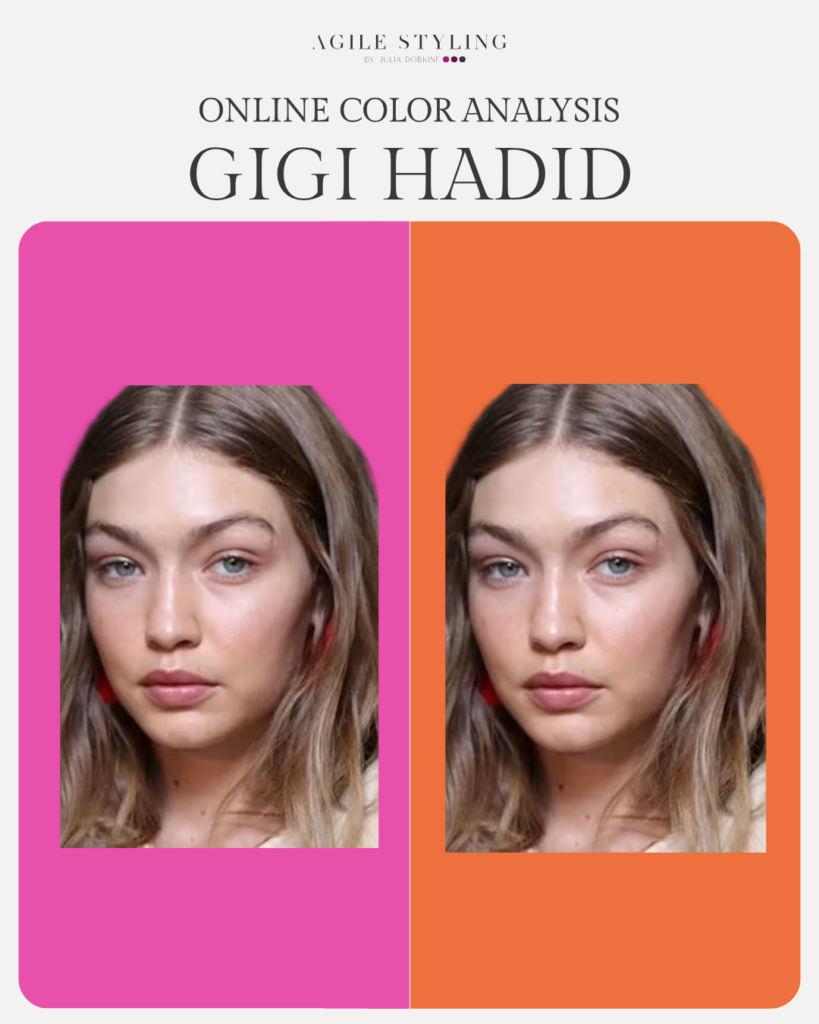
I had already spent five years performing color analysis in person before I even began developing my online method.
I believe that foundation is extremely important.
Physical draping teaches you how to observe real faces and real skin across many different complexions and types of natural coloring.
You learn what actually happens when different colors are placed around the face.
Does the complexion become more even?
Do shadows become stronger?
Does pigmentation become more visible?
What happens around the jawline?
Does the face come forward beautifully, or does the color begin competing with it?
You learn to recognize subtle changes in harmony, depth, temperature, brightness, softness, and contrast across hundreds and eventually thousands of faces.
That experience trains your eye.
And when you move into online color analysis from photos, you need that trained eye even more.
For me, learning online color analysis actually took longer than learning to analyze clients in person.
A photograph introduces variables you do not have when someone is sitting directly in front of you.
Lighting, exposure, camera settings, image quality, and differences between photographs can all affect what you see.
This is why professional online color analysis requires a carefully controlled process.
Today, my clients receive detailed instructions explaining when and how to take their photographs, what lighting to use, how many images I need, and what additional information will help me during their analysis.
But my methodology did not appear overnight.
I spent years developing it.
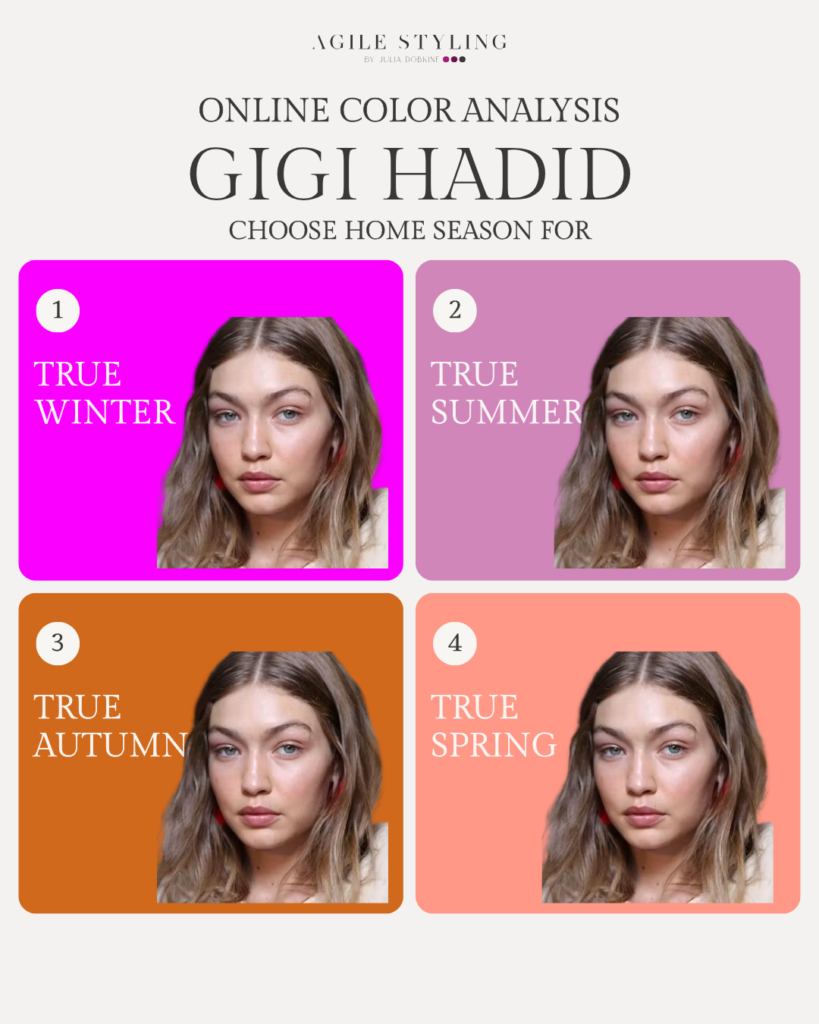
I am Julia Dobkine, founder of Agile Styling, and when I first became interested in online color analysis, I had already spent five years working with clients through physical draping.
At that time, the online color analysis tools and ready-made digital draping kits available today did not exist for me.
So I created my own templates and began developing my own method.
But I did not immediately start selling online color analysis.
For approximately one year, I used my upcoming in-person appointments to test my digital methodology.
Before a client came to my studio, I would ask her to send me photographs.
I analyzed those photographs digitally and recorded the season I believed she was.
Then she came to my studio, and I performed her complete in-person color analysis using physical draping.
The physical draping became my validation.
If my digital conclusion was correct, I could study what had led me to the right result.
If I was wrong, the physical draping revealed it.
After the client left, I went back to her photographs and digital analysis and studied the case again.
Where did I go wrong?
What did I miss?
Which reaction in the face had I interpreted incorrectly?
At first, I was getting only around 30% of cases right.
Then approximately 50%.
Gradually, my results became more consistent as I learned how to translate everything I had already trained myself to see in person into a digital environment.
I repeated this process for approximately one year before I felt confident enough to offer professional online color analysis as a paid service.
And I kept developing it.
Today, after more than 12 years of professional online color analysis, that original experiment has evolved into a proprietary methodology that I continue to use at Agile Styling.
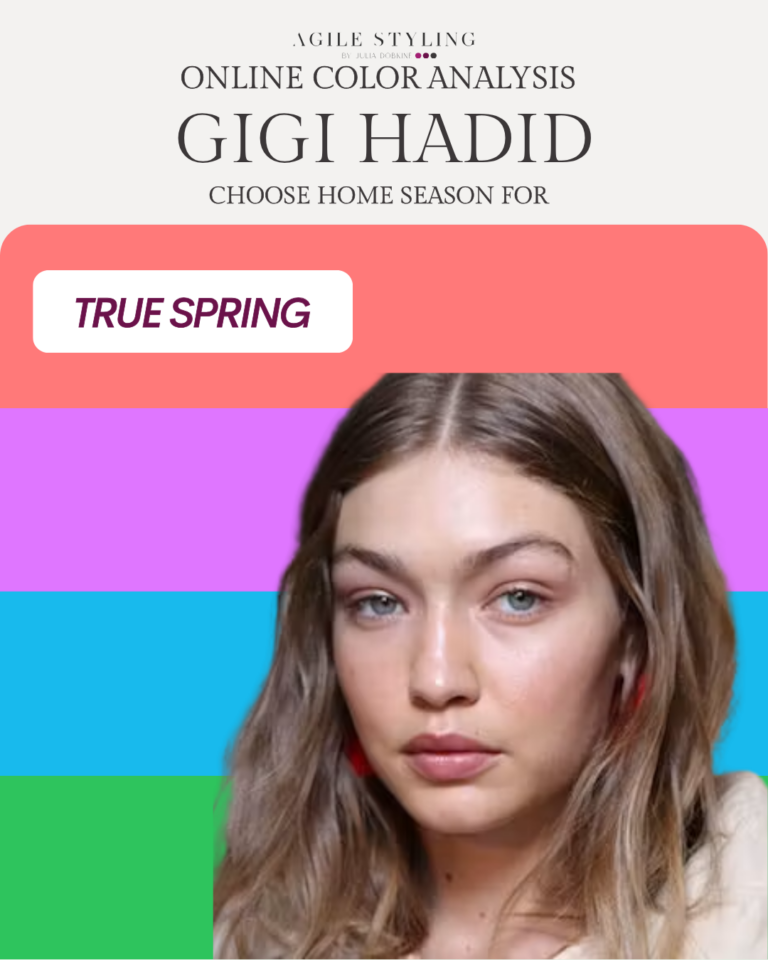
As I analyzed more complex cases, I realized that one digital draping template was not giving me enough information.
So I created another.
And another.
Today, the Agile Styling Julia Dobkine Method combines four different digital draping methods that I developed to analyze and cross-check a client’s result from different perspectives.
These are my own draping techniques. I developed them through years of testing, physical draping, digital analysis, observation, mistakes, comparison, and refinement.
They have never been taught, licensed, or made commercially available.
This makes the Agile Styling Julia Dobkine Method a unique approach to professional online color analysis, available exclusively through Agile Styling.
Digital draping now accounts for approximately 95% of my decision-making process during an online analysis.
I run the client’s photographs through different comparisons and look for consistency across the results.
And sometimes, even that is not enough.
In particularly challenging cases, I use another skill I have developed throughout my career: styling.
I may digitally style a client within potential seasonal palettes and look at the complete relationship between her coloring and the colors surrounding her.
I also observe individual reactions in the complexion, jawline, shadows, pigmentation, and overall facial harmony.
Every face is unique, and different people can reveal color harmony through slightly different visual clues.
Learning how to recognize those clues is where years of experience become incredibly important.
In my professional experience, yes. A carefully performed online color analysis can be highly accurate.
But uploading a few photographs does not automatically make an online analysis reliable.
The analyst needs the experience to understand what she is seeing, a methodology specifically developed for digital analysis, controlled photographs, comparative digital draping, and enough time to properly evaluate the result.
My online analyses are performed manually, which is also why my standard processing time is approximately three to four weeks.
I usually cannot perform more than five or six analyses in one day before my eye becomes tired.
And when my eye is tired, I stop.
Color perception requires concentration. I would rather take more time than rush someone’s result.
This is why I think the conversation around online vs. in-person color analysis often focuses on the wrong question.
Instead of asking only:
“Should I have my color analysis online or in person?”
I would ask:
“Who is going to analyze me?”
Look for a professional whose work you can actually see.
Ideally, you should be able to understand how that analyst works with real clients, how she approaches physical draping, how she performs digital draping, and how she explains color harmony.
Look at her work.
Look behind the scenes.
Understand her methodology.
Most importantly, choose someone whose eye and understanding of color harmony you trust.
For me, in-person color analysis remains the foundation of professional training, while online color analysis is a specialized skill built on top of that experience.
In my professional experience, once an analyst has mastered both and developed a rigorous digital process, physical distance does not have to prevent an accurate analysis.
This is why I offer my professional 16-season color analysis both online and in person.
Online clients can choose the level of guidance that works for them, from my Essential Palette to the more comprehensive Ultimate Palette, while the analysis itself follows the same commitment to careful, individual evaluation.
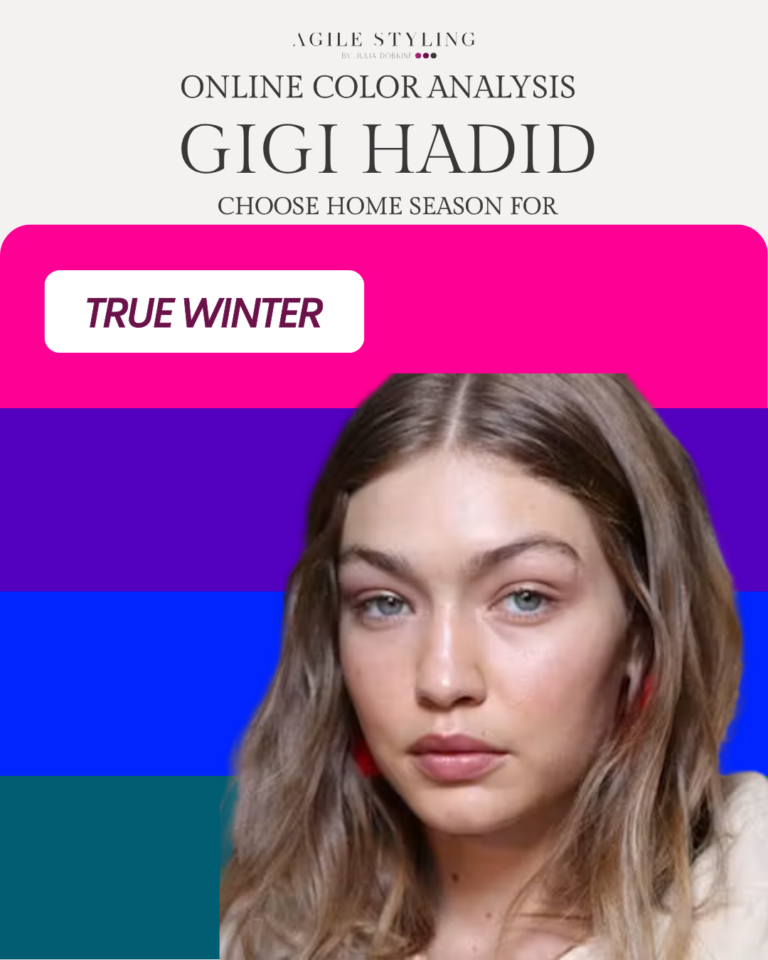
This happens more often than people expect.
You may have spent 20, 30, or 40 years seeing yourself in certain colors.
Your hair color, favorite lipstick, black wardrobe, or signature neutrals may have become part of how you recognize yourself.
Then suddenly, you receive a different seasonal color palette.
Even when the analysis is correct, your eye may need time to understand what it is seeing.
This is why I created my Digital Draping + Seasonal Comparison.
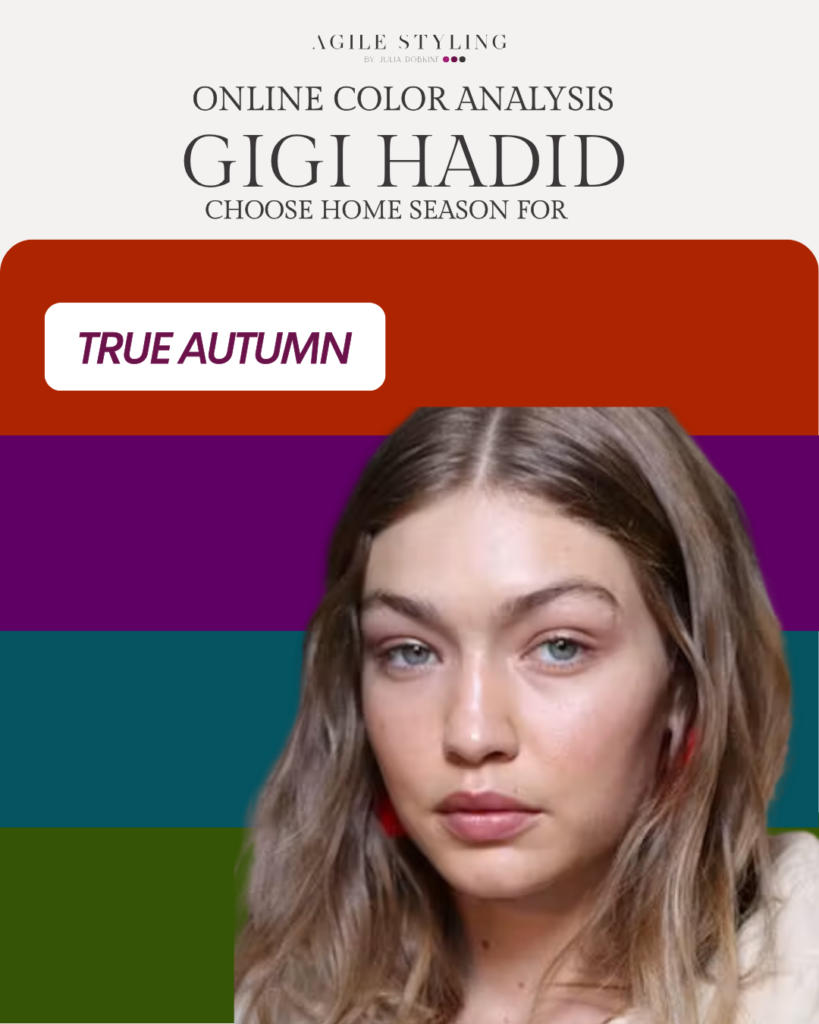
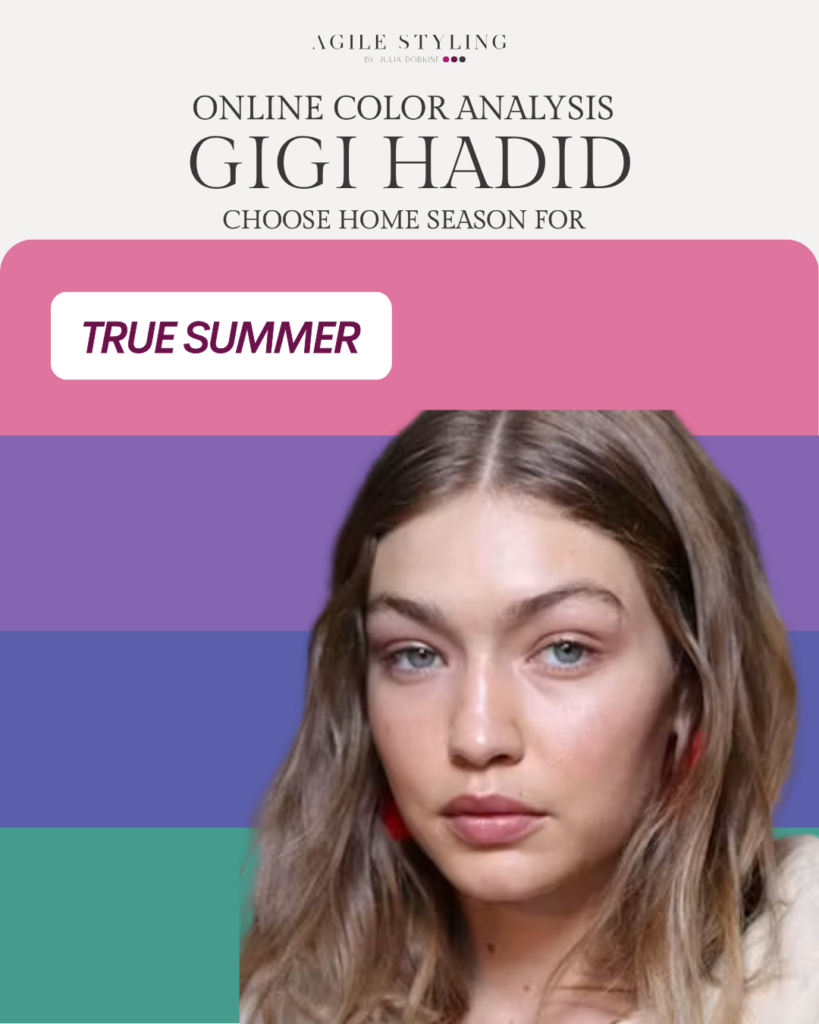
For clients who want to understand exactly how I reached their result, I can show how their face reacts to their season compared with neighboring seasons and explain the visual clues that led me there.
You can follow the reasoning behind your personal color analysis and understand why certain colors create greater harmony.
See Digital Draping + Seasonal Comparison
Sometimes the question is much simpler:
“Julia, I understand my season. How do I actually wear it?”
That is where a Follow-up styling session can help translate your seasonal color palette into your real wardrobe, makeup, hair, and personal style.
Absolutely.
I also conduct my personal Color Analysis Masterclass online, and clients love the experience because they can watch the draping process happening in front of them while staying in the comfort of their own home.
We can observe the color reactions together, discuss what I am seeing, and move into the practical questions that naturally come after discovering your palette.
For clients who want an interactive professional color analysis experience but cannot come to my studio, an online Masterclass gives them direct access to my process regardless of where they live.
There is one more challenge both my online and in-person clients eventually face.
Shopping.
Knowing that you are a Deep Winter, Light Spring, or Muted Autumn does not automatically mean you can recognize every shade belonging to your seasonal color palette in a store or on a website.
Your eye becomes better with practice, but the differences between similar colors can be surprisingly subtle.
For in-person shopping, I created the Pocket Palette, so you can carry your seasonal colors with you.
For online shopping, I created Color Match APP.
Once you know your season, you select your palette in Color Match APP and use it while shopping online. Color Match compares the color shown in the product image with the color database for your season, helping you evaluate how closely the item fits your palette.
Color Match APP does not perform your professional color analysis. It is a shopping tool designed to help you use your color analysis result afterward.
Before choosing any online or virtual color analysis service, look beyond the promise of a beautiful palette.
Ask who is actually analyzing you.
What is their professional experience?
Have they worked extensively with physical draping?
Can you see examples of their work with real clients?
What seasonal color analysis system do they use?
How do they collect the photographs used for analysis?
Is the analysis performed manually or automatically?
Do they use comparative digital draping?
Can they explain how they reached your result?
And is support available if you need help understanding or implementing your palette?
Your color season can influence years of decisions about clothing, makeup, hair, jewelry, and shopping.
Choose the analyst first. Then choose the format.
I spent five years analyzing clients in person before I began developing my online method.
Then I spent approximately one year testing my digital conclusions against subsequent physical draping before offering online color analysis professionally.
I have now spent more than seven years performing professional online color analysis and continuing to refine that process.
So when someone asks me whether I trust online color analysis, my answer is yes.
I trust the methodology I spent years developing.
In-person analysis taught me how to see color harmony.
Online analysis taught me how carefully I needed to translate those observations through photographs and digital draping.
Whether you are sitting across from me in my studio or sending me your photographs from another part of the world, my goal remains exactly the same:
to identify the colors that genuinely harmonize with you and give you the tools to confidently use them.
Professional online color analysis can be highly accurate when it is performed manually by an experienced color analyst using carefully prepared photographs, comparative digital draping, and a structured methodology. The experience of the analyst and the quality of the process are essential.
Physical draping allows a color analyst to observe the skin directly without a camera between the client and analyst. Online color analysis introduces additional variables, which is why it requires a rigorous digital methodology and carefully controlled photographs. In my professional experience, after years of performing both methods, a properly conducted online analysis can provide a highly accurate result.
At Agile Styling, clients submit photographs according to detailed instructions. I manually analyze those photographs using the four digital draping methods within the Agile Styling Julia Dobkine Method, compare the client’s reactions to different color characteristics, and determine the client’s season within my 16-season color analysis methodology.
The quality of the photographs is extremely important. Agile Styling provides detailed instructions explaining how and when to take your photos, the lighting conditions required, how many photographs to submit, and other information needed for professional digital analysis.
The terms virtual color analysis, digital color analysis, and online color analysis are often used interchangeably. However, the actual process can vary significantly between providers. At Agile Styling, online color analysis refers to a manual professional analysis performed by Julia Dobkine using client photographs and proprietary digital draping methods.
Yes. Agile Styling offers professional 16-season color analysis online as well as in person. Online clients can also add Digital Draping + Seasonal Comparison if they would like to see and understand how their result was determined.
Start by choosing the professional and methodology you trust. Consider the analyst’s experience with both physical and digital draping, their work with real clients, their analysis process, and the support provided after your result. Once you trust the professional, choose the format that works best for your location and preferred experience.