
Warm Spring Color Palette: A Complete Guide to the 16-Season Color Analysis System
Warm Spring is one of the most interesting Spring palettes in the 16-season color analysis system.
It has the brightness, warmth, and energy we associate with Spring, but with a subtle influence from Autumn that gives the palette slightly more depth and softness than True Spring.
In the Agile Styling 16-season system, Warm Spring is a flow season between True Spring and True Autumn, with True Spring as its home season.
Its main color characteristics are:
Warm Spring remains unmistakably Spring, but it carries enough Autumn influence to create a different level of depth, contrast, and softness.
This is also where some confusion begins.
In many 12-season systems, Warm Spring refers to the fully warm core Spring season. In the Agile Styling 16-season system, that core season is True Spring, while Warm Spring is a separate palette with its own balance of depth, brightness, and contrast.
So if you search Warm Spring online, you may see palettes that look much lighter and brighter than your own.
What Does a Warm Spring Person Look Like?
There is no single Warm Spring appearance.
A Warm Spring can have several different combinations of hair, eyes, and skin because the season is determined by how the skin responds to color, not by one physical feature.
However, Warm Spring often shows a recognizable mix of Spring and Autumn characteristics.
You may see:
The skin itself can vary considerably.
Some Warm Springs have a softer, more matte complexion, while others have skin that looks more reflective, luminous, or glossy.
What usually connects these people is that the coloring still reads as Spring first, with a subtle influence from True Autumn.
What Are the Best Colors for Warm Spring?
Warm Spring is a very nuanced palette.
It has a wide range of colors, but it is also one of the palettes people often confuse with True Spring.
That usually happens because Warm Spring still has brightness and contrast, but the colors are slightly deeper and softer than True Spring.
The best Warm Spring colors are:
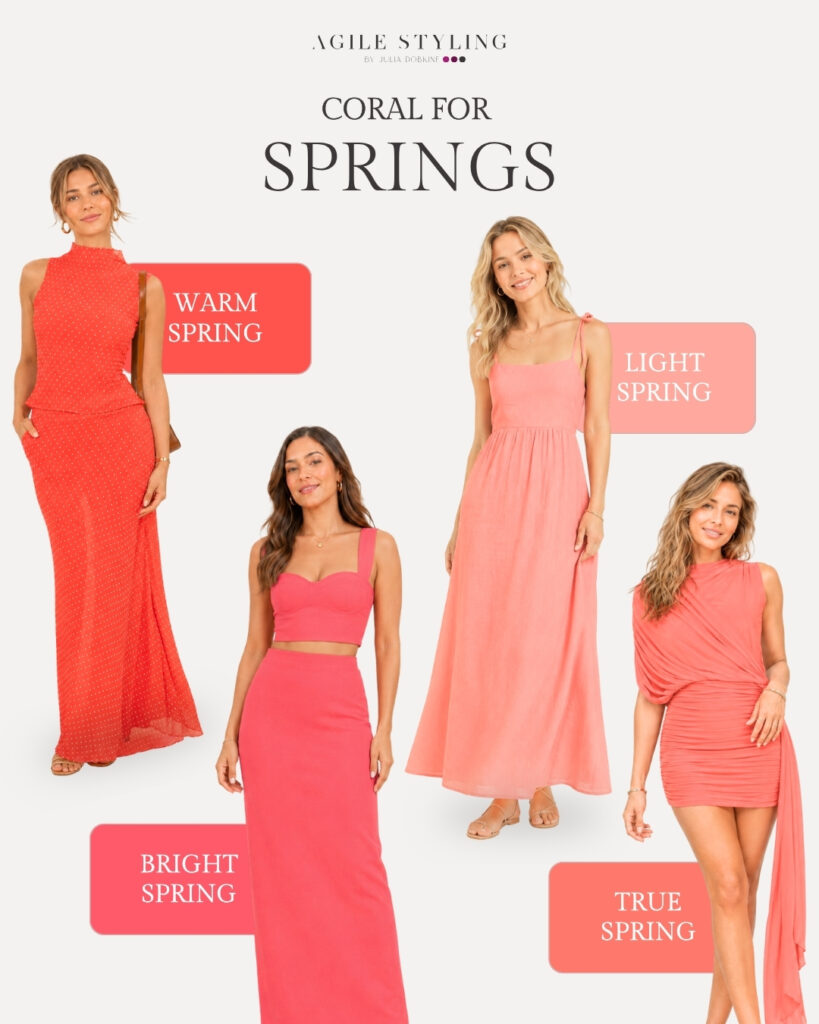
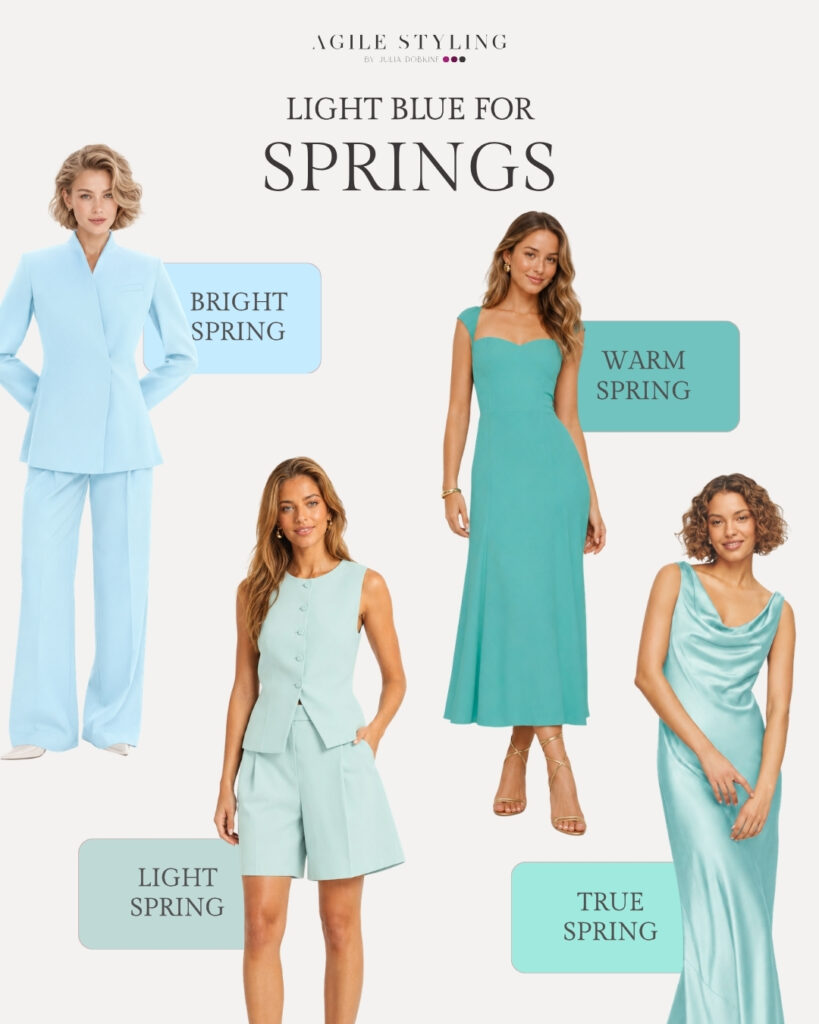
Think warm coral, peach, poppy red, golden yellow, warm turquoise, fresh warm greens, camel, warm beige, and warm browns.
Colors that become extremely bright and light start moving toward True Spring.
Colors that become too deep and earthy move toward Autumn.
Warm Spring lives between the two.
And this is exactly why shopping by color name alone can be difficult.
Two shades may both be called coral, green, beige, or red and still sit in completely different palettes.
Color Match makes this much easier by allowing you to check whether a color actually belongs within your Warm Spring palette instead of guessing from the name.
What Colors Should Warm Spring Avoid?
Warm Spring generally struggles with colors that move too far away from its warm Spring foundation.
Be cautious with:
The exact response always depends on the individual, which is why professional draping remains more reliable than trying to identify a season from color lists alone.
How to Style a Warm Spring Color Palette
Warm Spring styling should still feel very Spring.
Because Spring is the home season, Warm Spring can handle more contrast and visual energy than Warm Autumn, while generally needing slightly less contrast than True Spring.
You can use:
This is where many Warm Springs limit themselves unnecessarily.
They discover they are warm and immediately retreat into beige, camel, brown, and olive.
But Warm Spring has much more potential than that.
The palette can create beautiful, colorful, sophisticated combinations while still looking harmonious.
The Color Styling Guide was created for exactly this purpose. It includes 4 styling techniques and 256 visual color combinations designed specifically for your seasonal palette, so you can see how your colors work together instead of repeating the same few combinations.
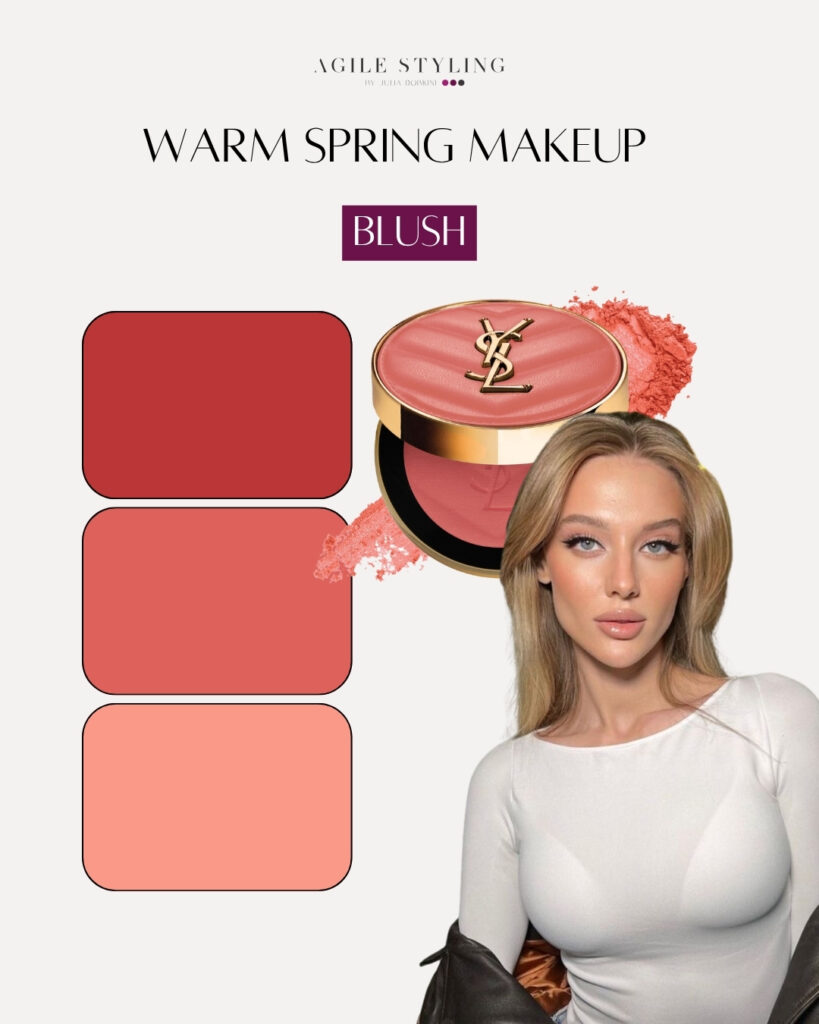
Warm Spring Makeup
Warm Spring makeup should feel warm, fresh, and slightly softer than True Spring makeup.
Good directions include:
Warm Spring can absolutely handle visible color in makeup.
The key is choosing shades that have the right warmth, depth, and intensity for the season.
If you want exact product and shade recommendations instead of trying to translate your palette into makeup yourself, use the Makeup Guide for your season.
Warm Spring Hair Color
Warm Spring hair should support the warmth and moderate depth of the palette.
Depending on the person’s natural coloring, flattering directions may include:
The exact depth matters, especially because Warm Spring can range from lighter coloring to brunette.
The Hair Guide gives season-specific direction so you can keep your hair aligned with the rest of your palette.
How to Shop for Warm Spring Colors
Shopping for Warm Spring can be surprisingly difficult.
Retailers do not label clothing according to seasonal color analysis, and Warm Spring can sit very close visually to both True Spring and warmer Autumn shades.
This is where people often start second-guessing themselves.
A color can look “warm enough” or “Spring enough” and still be too bright, too light, too deep, or too earthy for Warm Spring.
Color Match solves this problem by allowing you to select your exact season and check colors against your palette.
You can use it while shopping online, and you can also upload photos of items you already own to see whether they work within your season.
How to Get the Most From Your Warm Spring Color Palette
Knowing your season is only the beginning.
The real transformation comes from using your palette across your wardrobe, makeup, hair, shopping, and styling.
Use:
Not Sure If You Are Warm Spring or True Spring?
This is one of the most common points of confusion.
A person may identify strongly with Spring, but then find that True Spring colors feel slightly too bright, too light, or too clear.
That can be a sign that there is more depth and softness in the coloring than a True Spring palette allows.
Warm Spring sits just one step toward True Autumn, so the difference can be subtle.
This is exactly why appearance alone is not enough.
Professional draping compares how your skin responds to True Spring, Warm Spring, True Autumn, and the surrounding palettes so you can see which direction actually creates the most harmony.
If you are unsure whether you are True Spring or Warm Spring, a professional color analysis will give you the clearest answer.
Warm Spring Color Palette FAQs
Warm Spring has a fully warm undertone in the Agile Styling 16-season color analysis system.
Warm Spring is a Spring season. Its home season is True Spring, with some influence from True Autumn.
True Spring is generally lighter, brighter, clearer, and higher in contrast. Warm Spring is slightly deeper, softer, and medium in intensity because of its True Autumn influence.
Warm Spring has True Spring as its home season and generally needs more brightness, freshness, and contrast. Warm Autumn has True Autumn as its home season and is softer and more grounded.
Warm Spring looks best in fully warm colors with medium intensity and light to medium-dark value. Good directions include warm coral, peach, poppy red, golden yellow, warm turquoise, fresh greens, camel, and warm browns.
Yes. Warm Spring is still part of the Spring family and can wear noticeable, lively colors. The best shades are generally slightly softer and deeper than True Spring colors.
Warm Spring can wear some medium-dark colors within its palette, but very deep and heavy colors can overpower the natural Spring quality.
Black is generally more severe than the ideal Warm Spring palette. Warmer dark neutrals usually create better harmony.
Warm Spring usually looks better in warm white, cream, and other warm light neutrals than in stark cool white.
Warm Spring makeup works best when it is warm, fresh, and medium in intensity. Warm peach, coral, warm browns, soft golds, poppy reds, and warm coral lipsticks are strong directions.
Warm blonde, golden blonde, warm brown, golden brown, chestnut, and soft copper-influenced directions can work beautifully depending on the individual’s depth and contrast.
Warm Spring can use more contrast than Warm Autumn while generally needing slightly less contrast than True Spring. Neutral plus accent combinations, tonal styling, two-color contrast, and three-color outfits can all work beautifully.
Explore 256 Warm Spring color combinations in the Color Styling Guide
Many online resources use a 12-season system. In many 12-season systems, Warm Spring represents the fully warm core Spring season. In the Agile Styling 16-season system, True Spring is the core Spring season and Warm Spring is a separate flow between True Spring and True Autumn.
Color names alone are unreliable because shades with the same retail name can differ in undertone, depth, and intensity. Use Color Match to compare colors against your exact Warm Spring palette.
Check Warm Spring colors with Color Match
Appearance can provide clues, but professional draping is the most reliable way to determine whether you are Warm Spring. If True Spring colors consistently feel too bright or too light, Warm Spring may be worth testing professionally.