
What Color Season Am I? And Who Actually Needs Color Analysis?
What color season am I?
After more than 13 years of working with color, I think there is another question worth asking:
Do you actually need to know?
I have worked with thousands of women who absolutely loved discovering their color season. I have also worked with women who received their answer and realized they didn’t really want to change anything.
And that made me think a lot about who actually benefits from color analysis.
Because knowing that you are a Deep Winter, Light Summer, or Warm Autumn is simply information.
The value comes from what that information allows you to do.
We Know What the “Cool Girl” Should Wear. But Will It Work for You?
We have been given a very clear picture of what a stylish woman is supposed to look like.
We know the hair she should have.
The clothes she should own.
The color combinations that are considered chic.
The lipstick that is having a moment.
The shoes, the bag, the sunglasses, the perfect neutral, the perfect white shirt.
We know what the “cool girl” should buy.
For decades, fashion and beauty marketing has created these visual formulas for us. Today, social media repeats them at an incredible speed.
This is cool. This is elegant. This is sophisticated. This is what you need to wear right now.
And because we see the same visual messages again and again, they eventually start to feel like rules.
But there is one very important question missing:
Will any of this actually work for you?
We were taught what is fashionable. We were shown what stylish looks like. But most of us were never taught how to evaluate those ideas against our own coloring, features, and natural level of contrast.
And color is deeply individual.
The perfect beige is not universally perfect.
The viral mauve lipstick is not universally flattering.
The brunette everyone is asking for at the salon does not create the same effect on every complexion.
Even black, perhaps the biggest fashion “must-have” of all, does not create the same harmony on every person.
This is where I see the real value of color analysis.
It gives you your own point of reference.
Instead of asking, “Is this fashionable?”
You start asking:
“Does this work for me?”
And that small shift changes the way you shop, choose makeup, approach your hair, build outfits, and eventually develop your own personal style.
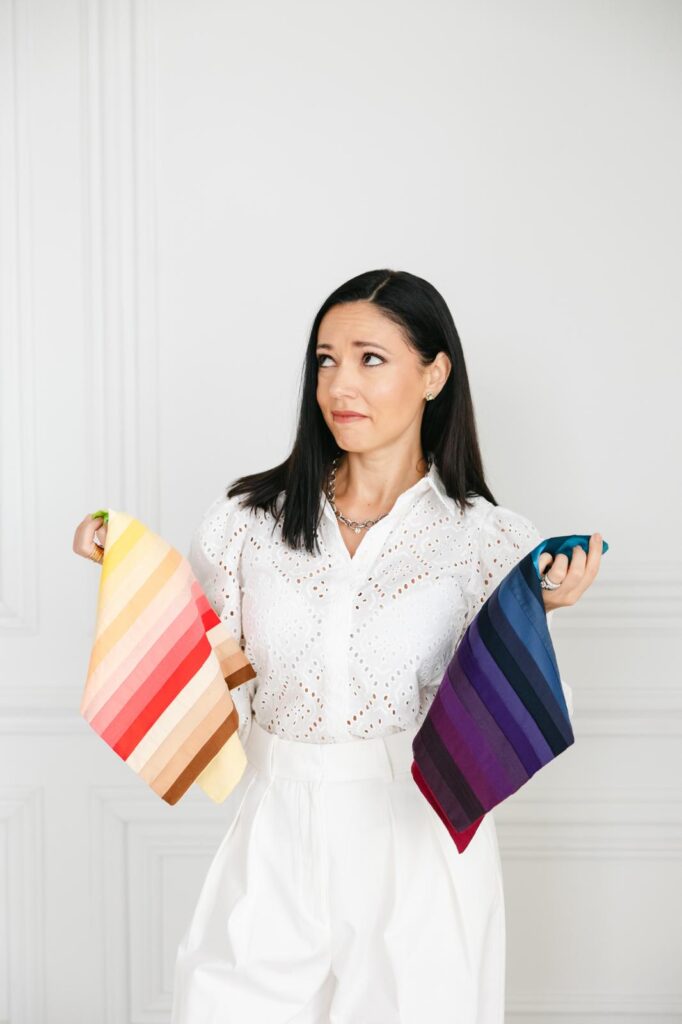
We Usually See When Something Is Wrong. We Just Don’t Know Why.
This is where our natural sense of harmony comes in.
Most people can recognize when something looks slightly off, even without understanding color theory.
A lipstick looks too strong.
A hair color makes the complexion look yellow.
A beige makes the face disappear.
A beautiful outfit somehow doesn’t look as good once you put it on.
You see the result, but you may not understand what is causing it.
Professional color analysis identifies those relationships systematically.
We analyze temperature, value, intensity, contrast, and most importantly, how the complexion responds to color.
Instead of relying entirely on intuition, you begin to understand what your eye has been trying to tell you.
Color Analysis Gives You a Filter
This, to me, is one of the biggest benefits of knowing your color season.
It gives you a filter for all the information coming at you.
A certain brown is trending. Is it your brown?
Everyone is buying a mauve lipstick. Is it your mauve?
You want to change your hair color. How warm, cool, light, dark, soft, or bright should you go?
You want to introduce more color into your wardrobe. Where do you start?
Your seasonal palette gives you parameters.
It gives you a color direction within which you can develop your personal style.
And this applies far beyond clothing.
Your season gives you direction for hair, makeup, jewelry, accessories, and the colors you combine in an outfit.
Suddenly, you have a much easier way to filter trends and recommendations instead of treating every new suggestion as something you need to try.
I Personally Let Color Do the Heavy Lifting
I am actually quite minimalist with my own style.
I don’t need a million styling tricks to make a simple outfit interesting.
I prefer a great silhouette and a beautiful color combination.
I let color do the heavy lifting.
When the colors already create harmony and interest, I don’t need endless accessories, layers, tucks, twists, and styling tricks.
Color itself can be the styling.
And this is particularly useful if you are someone who wants a smaller, more intentional wardrobe.
You don’t necessarily need more clothes.
You need pieces that work together.
When your wardrobe is built around one harmonious color palette, creating combinations becomes significantly easier.
This is also why I created the Season Styling Guide, with 256 color combinations for each seasonal palette.
Knowing your colors individually is one step.
Knowing what to do with them together is where styling begins.
So, What Color Season Am I?
Now we get to the actual question.
At Agile Styling, I use a 16-season color analysis methodology.
And I don’t start by deciding that someone must be a Summer because she has blonde hair or a Winter because she has dark hair.
My analysis follows a sequence:
Undertone → Home Season → Subseason
Each step answers a different question.
The first step is understanding whether your undertone is warm, cool, or neutral.
Your visible skin tone alone does not give us that answer. Tanning, redness, pigmentation, and other surface characteristics can easily create confusion.
If you want to start exploring this yourself, begin with my Free Undertone Test.
Once we understand undertone, we move into the four home seasons:
True SpringTrue SummerTrue AutumnTrue Winter
Your home season establishes the foundation of your color direction.
I created a second free tool specifically for this step:
Take the Free Home Season Test
This is where the analysis becomes much more precise.
Within the Agile Styling 16-season system, I determine where you sit within your home season and how your coloring relates to neighboring seasons.
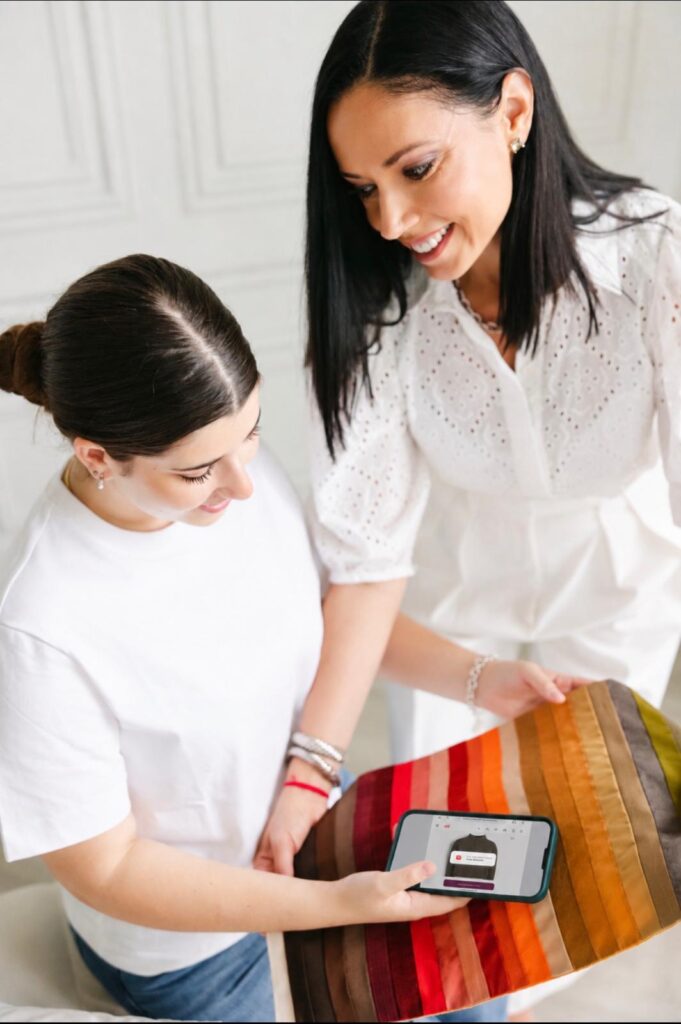
This is done through comparative draping.
We are looking at your actual response to changes in temperature, depth, intensity, contrast, and overall color harmony.
This is also why physical characteristics alone cannot reliably tell you your exact season.
Your coloring gives us information.
Draping shows us how color interacts with it.
If you want your precise season professionally determined, you can start with the Essential Palette Color Analysis.
Who Benefits Most From Color Analysis?
You don’t need to hate your wardrobe.
You don’t need to be “bad at fashion.”
You don’t need to have a dramatic style problem.
Sometimes curiosity is enough.
Color analysis is particularly useful if you:
For me, that last one matters.
You don’t need a problem that color analysis has to solve.
You may simply want to know.
Who Doesn’t Need Color Analysis?
I sell color analysis for a living, so perhaps I’m not supposed to say this. 😂 But genuinely, I don’t think everyone needs one.
If you already have a very established personal style, love your colors, feel completely confident in your hair and makeup choices, and have no desire to change or explore any of them, you probably don’t need color analysis.
If you have a handful of colors you adore and happily wear all the time, and you have no interest in expanding beyond them, that is perfectly fine too.
And if you know beforehand that you would never change the colors you wear regardless of the result, professional color analysis may give you information that conflicts with choices you have already made.
Color analysis requires a certain amount of curiosity.
You have to be interested in seeing yourself from a slightly different perspective and exploring what happens when you change the colors around you.
You still decide what to do with that information afterward.
What Happens After You Know Your Color Season?
Finding your season is the beginning.
Then you need to translate your palette into real life.
Your seasonal direction helps you understand which temperature, depth, and intensity to look for when choosing lipstick, blush, eye makeup, and other beauty products.
Explore the Seasonal Makeup Guide
Hair color can completely change the way your complexion looks. Your seasonal palette gives you a clearer direction for choosing shades that harmonize with your natural coloring, whether you’re going lighter, darker, warmer, cooler, or simply refining your current color.
Explore the Seasonal Hair Guide
The Pocket Palette gives you a portable reference for recognizing your colors while you’re actually standing in a store.
Color Match helps you use your seasonal palette while shopping online, in stores, and from your own photos.
Once you know your season, simply select your palette and check colors from online product images, photos you take, or images saved in your photo library to see how well they match your colors.
Color Match supports 4, 12, and 16-season systems.
Free 10 Color Matches
Knowing that a color belongs to your palette is one thing.
Knowing what to pair it with is another.
The Colot Styling Guide includes 256 color combinations within your seasonal palette, giving you practical ways to turn individual colors into complete outfits.
Explore the Color Styling Guide
The goal is to take your result beyond knowing the name of your season.
You want to be able to use it.
So, Do You Actually Need to Know Your Color Season?
Ask yourself one question:
Would knowing your colors change the way you make decisions?
Would it help you shop with more direction?
Would it help you understand your makeup?
Would it give you better direction before changing your hair?
Would you experiment with colors you’ve spent years avoiding?
Would it help you create a wardrobe that feels more cohesive?
Or are you simply curious to understand why certain colors have always looked incredible on you while others never quite worked?
If any of those questions make you curious, start there.
Find your undertone. Find your home season. See what you discover.
Frequently Asked Questions About Color Seasons
Your color season is determined by how your natural coloring responds to different characteristics of color. At Agile Styling, Julia Dobkine analyzes undertone first, home season second, and subseason third within a 16-season color analysis system.
Start by identifying your undertone. Then determine your home season: True Spring, True Summer, True Autumn, or True Winter. From there, comparative draping is used to determine your more precise subseason.
You can begin with Agile Styling’s Free Undertone Test and Free Home Season Test.
Take the Free Home Season Test
The four home seasons in the Agile Styling 16-season methodology are True Spring, True Summer, True Autumn, and True Winter.
Your home season establishes your primary seasonal direction before your subseason is determined.
Undertone is determined by how your natural coloring responds to different color temperatures. Visible skin characteristics such as tanning, redness, or pigmentation should not be used alone to determine whether you are warm, cool, or neutral.
You can begin exploring yours with the Free Undertone Test.
Self-testing can help you begin understanding your coloring, particularly your undertone and home season.
Determining your precise subseason is more complex because personal preferences, lighting, photography, and subtle differences between colors can influence what you see.
Professional comparative draping allows those differences to be evaluated systematically.
Hair and eye color provide useful information about your overall coloring, but they do not determine your season by themselves.
Blonde hair does not automatically mean Spring or Summer. Dark hair does not automatically mean Winter. Brown eyes do not automatically indicate warm coloring.
Color analysis looks at how your complexion responds to color rather than assigning a season from physical characteristics alone.
Your home season identifies your primary seasonal family: True Spring, True Summer, True Autumn, or True Winter.
Your subseason gives a more precise placement within the 16-season system based on characteristics including temperature, value, intensity, and your relationship with neighboring seasons.
Professional color analysis is useful when you want individualized direction for clothing, makeup, hair, jewelry, shopping, or personal style.
The real value comes from applying your result to the decisions you already make every day.
Color analysis is particularly useful for people who want to understand their natural coloring, develop their personal style, create a more cohesive wardrobe, choose hair and makeup colors more confidently, introduce more color, or filter fashion and beauty recommendations through their own color direction.
Curiosity alone is also a perfectly good reason to explore your color season.
Someone who already feels completely confident in her established colors and personal style, has no interest in exploring different color directions, and would not use the result may have little practical need for professional color analysis.
Your underlying seasonal palette does not change because you age or tan.
Your surface coloring may change, but your undertone remains the foundation of your color direction.
Start learning how to use the full palette.
Apply your seasonal direction to clothing, makeup, hair, jewelry, and accessories. Learn how to combine your colors and use palette references when shopping in person or online.
Knowing the name of your season is useful.
Knowing what to do with it is where the real transformation begins.