
What to Do After Color Analysis: A Step-by-Step Guide to Using Your Color Palette
So, you completed your color analysis.
You know your season. You have your palette. You are excited.
And then something unexpected happens.
Instead of immediately using your colors, you start researching more.
You follow more color analysts. You save more posts. You compare palettes. You look at celebrity examples. You keep reading and reading.
And somehow, the more information you collect, the less clear everything feels.
This is one of the most common things I see after color analysis.
The problem is rarely a lack of information.
The problem is that you have not yet started implementing what you already know.
For many people, receiving a new seasonal color palette can actually feel intimidating. You may have spent years wearing a completely different set of colors, so even a beautiful result can feel unfamiliar at first.
That is normal.
Color analysis gives you direction. The transformation happens when you begin applying your color analysis results to your hair, makeup, wardrobe, shopping, and styling.
Over the years, I have developed a practical sequence that helps clients move through this process with much more clarity.
Think of this as your practical guide to how to use your color analysis results, transition your wardrobe, update your hair and makeup, and start shopping your seasonal color palette with confidence.
Step 1
Give Yourself Time to Understand Your Seasonal Color Palette
Your first step is surprisingly simple.
Do not immediately start buying everything.
Spend a little time with your palette.
For some people, that may be a few days. For others, it may take a week or longer.
Look through your colors without outside noise.
Choose:
You do not have to emotionally connect with every color in your palette on day one.
Start with the ones that already feel approachable.
This gives you a comfortable entry point instead of turning your color analysis into another overwhelming project.
Step 2
Do a Wardrobe Audit After Color Analysis
Before shopping, review what you already own.
A wardrobe audit after color analysis helps you understand which pieces already work within your seasonal color palette and which pieces you may want to replace gradually.
Start with the clothes you wear most often.
Take photos of your clothing and upload them into Color Match to check whether the colors fall within your selected season.
Color Match analyzes the color in the uploaded image as it appears and compares it with your seasonal palette.
Ask yourself:
You do not need to remove everything outside your palette immediately.
A color analysis wardrobe transition does not require a dramatic closet purge.
The goal is awareness.
Once you know what is already working and what is not, you can begin making more strategic decisions.
Review your wardrobe with → Color Match
Step 3
Bring Your Hair Into Harmony With Your Color Season
Your hair is one of the largest blocks of color surrounding your face.
If your palette is cool but your hair is very warm, or your palette is soft and your hair is extremely bright, the overall picture can feel disconnected even when your clothing colors are correct.
This is why hair should be addressed early in your post-color-analysis process.
You do not necessarily need a dramatic transformation.
Sometimes the adjustment is subtle:
The goal is to make your hair work with your seasonal color palette instead of against it.
If you need visual guidance, the Hair Guide can help you understand which hair colors work best for your season.
Step 4
Update Your Makeup After Color Analysis
Makeup is another major part of your color analysis transformation.
If your clothing is aligned with your season but your makeup is moving in the opposite direction, the overall result may still feel off.
For example, someone with a cool seasonal palette wearing strongly warm foundation, blush, lipstick, and bronzer is creating conflicting color messages around the face.
Go through your makeup drawer and review:
You do not need to replace everything in one afternoon.
Start with the products that create the biggest visual impact.
Lipstick, blush, and foundation are usually the best place to begin.
The Makeup Guide can help you choose makeup products that align with your seasonal color palette instead of relying on trial and error.
Step 5
How to Shop After Color Analysis Without Overspending
Once you understand your current wardrobe, you are ready to shop more strategically.
Do not shop simply because something belongs to your palette.
A beautiful color is still a bad purchase if you do not need the item.
Before you buy anything, create a shopping list.
Ask yourself:
This is where a capsule wardrobe strategy can be extremely helpful.
My Capsule A to Z guide can help you understand what you actually need and how to build a wardrobe after color analysis without accumulating random pieces.
Then make yourself one promise:
For the next year, try to make every new purchase intentionally within your seasonal palette whenever possible.
You do not need to transform your entire wardrobe immediately.
Let the transformation happen through better decisions.
Step 6
How to Shop Your Color Palette With Color Match
For years, I told clients that after color analysis they needed to train their eye.
That advice can still help.
But color is complicated.
Several reds can look almost identical and belong to completely different seasonal palettes.
The same is true for green, blue, beige, pink, brown, and almost every other color family.
Temperature, depth, brightness, and softness can shift very subtly.
Most people do not spend thousands of hours training their eye for color.
And now, you do not need to.
Color Match is a seasonal color analysis shopping app that allows you to select your color season, shop online through the app, and check whether the color you are viewing belongs within your palette.
You can also upload photos of clothing you already own and check those colors against your season.
This means Color Match helps at both ends of your wardrobe transformation:
First, understand what is already in your closet.
Then, make better choices about what comes into it next.
Step 7
Learn How to Style Your Seasonal Color Palette
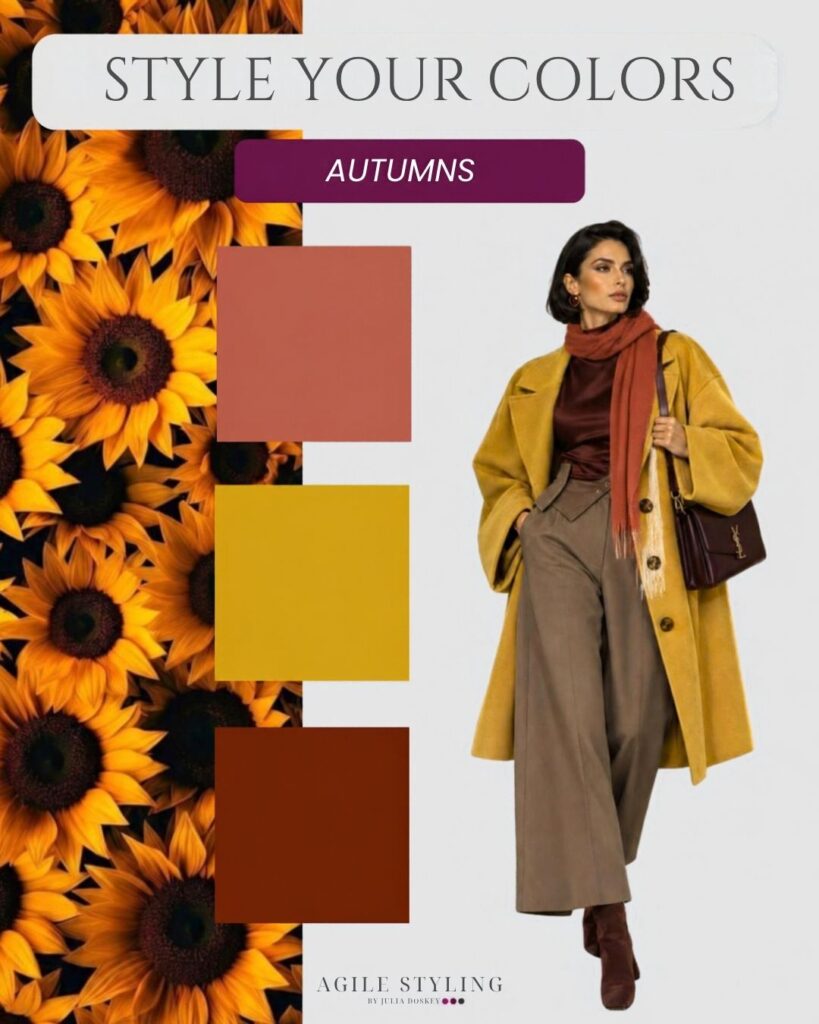
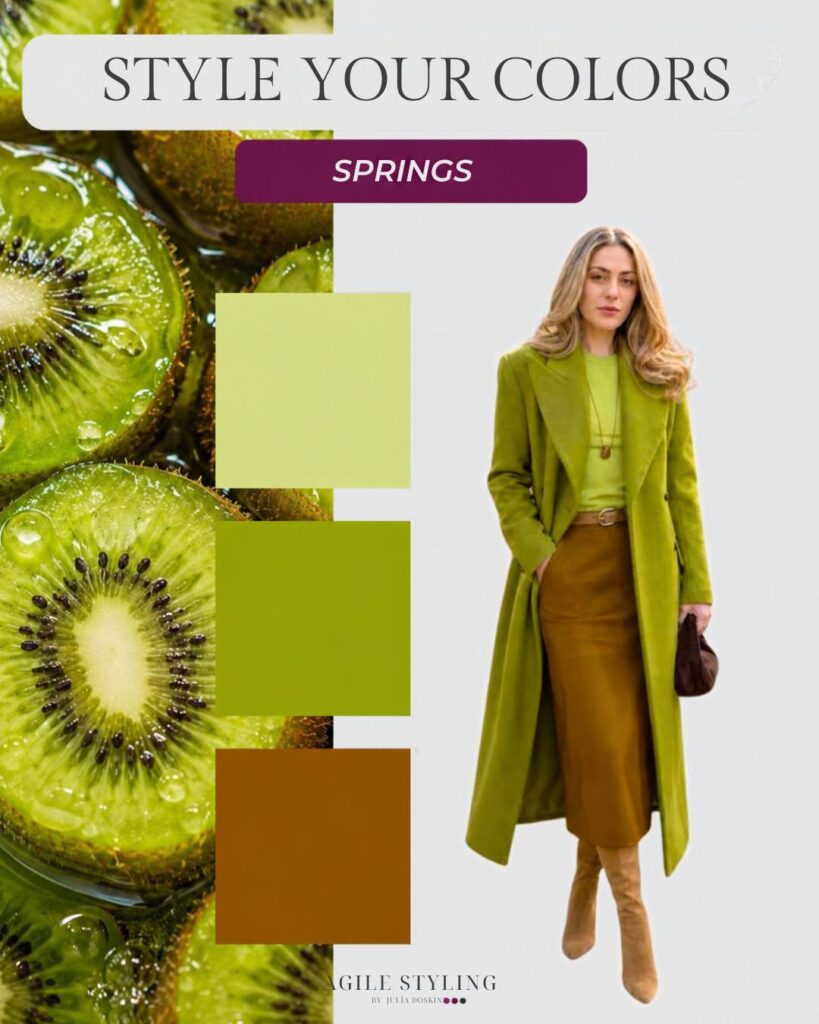
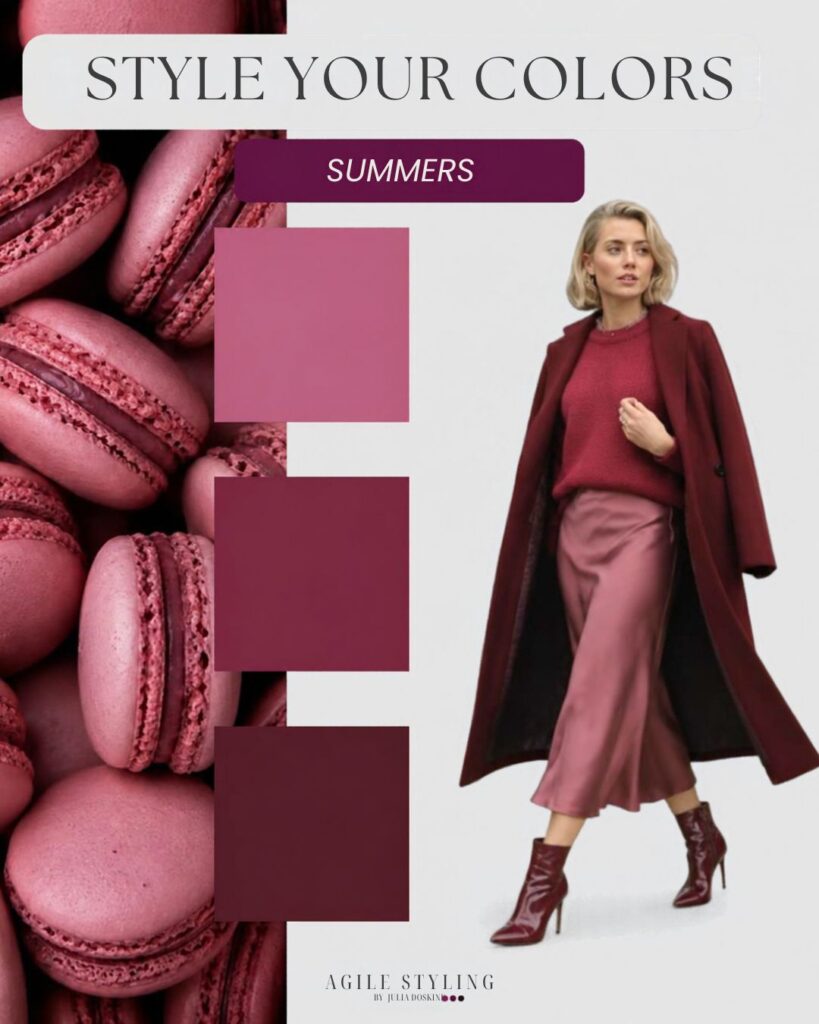
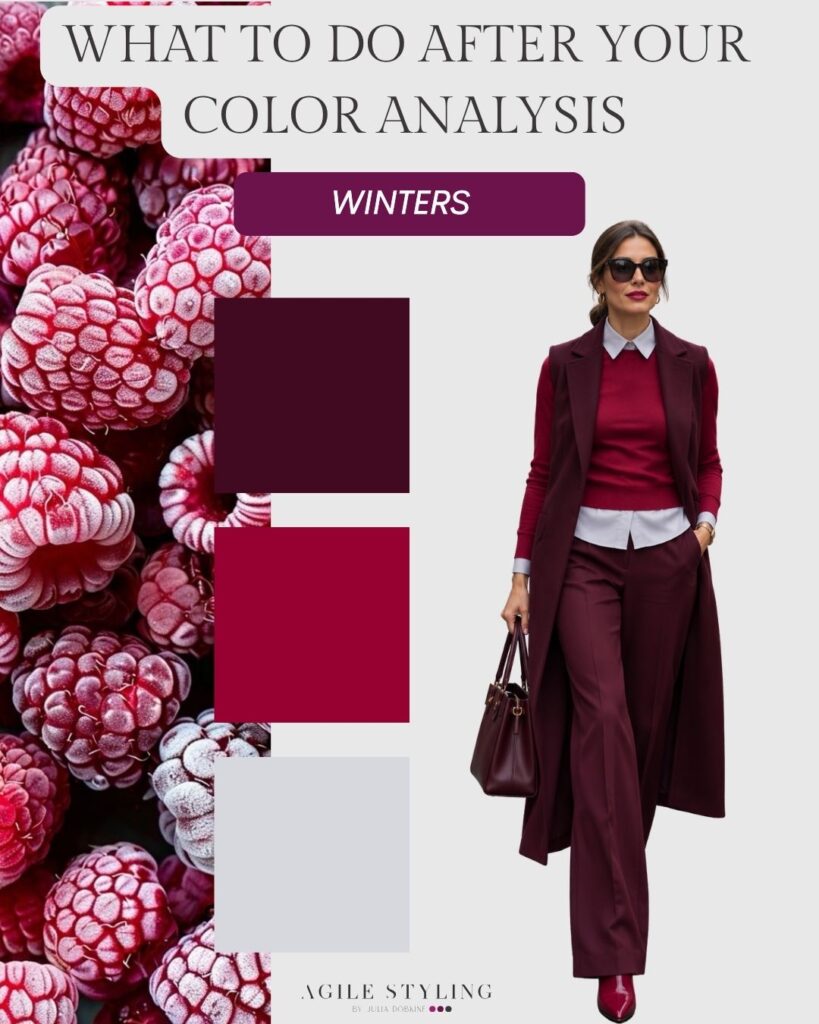
Once you know which colors belong to your season, the next step is learning how to combine them.
A lot of people receive their palette, find two or three colors they feel comfortable wearing, and stay there forever.
That works, but you are missing most of what your palette can give you.
The colors within your season share similar color dimensions, which means they naturally coordinate well.
You can create:
You are no longer trying to make random colors cooperate.
You are styling within one harmonious color system.
Step 8
Use the Color Styling Guide to Build Complete Outfits
If you are wondering how to style your seasonal color palette, the Color Styling Guide gives you a visual system instead of leaving you to invent combinations from scratch.
Knowing your colors individually is useful.
Knowing how to combine them is where your wardrobe starts looking intentional.
The Color Styling Guide includes:
Most generic color-combination tools online are based on general color theory.
This guide is built around your seasonal color palette.
That means every color combination already works within the same dimensions of temperature, depth, and intensity.
You can open the guide, see the combination visually, and use it as inspiration for what you already own or what you want to buy next.
And because we are featuring the Color Styling Guide this October, it is currently on sale.
If you have been wearing the same few colors from your palette and want to finally see how much more you can do with them, this is the perfect time to start.
Step 9
Think About Color Analysis Holistically
This is one of the most important mindset shifts after color analysis.
Your hair, makeup, clothing, jewelry, accessories, and styling all communicate together.
Think of it like a puzzle.
One correct piece does not create the full picture.
As more pieces begin working within the same seasonal color language, the harmony becomes visible.
Your makeup starts working with your hair.
Your clothing starts working with your complexion.
Your accessories stop feeling random.
Your wardrobe becomes easier to style.
This is when color analysis begins to feel less like theory and more like personal style.
Step 10
Give Your Wardrobe Transformation Time
Social media has created unrealistic expectations around how quickly a color analysis transformation should happen.
You see a before-and-after image and it looks instant.
Real life is different.
Learning how to use your seasonal color palette, transition your wardrobe, update your makeup, adjust your hair, and build new styling habits can take years.
It took me around five years to fully transition my own wardrobe after my color analysis.
And that is completely normal.
You are building something intentionally.
Do not judge your progress by how quickly you replace everything.
Judge it by whether every new decision is moving you in the right direction.
One better purchase.
One better lipstick.
One new color combination.
One outfit that suddenly feels completely right.
That is how confidence is built.
Your Post-Color-Analysis Toolkit
If you want the process to feel easier, use the right tool for each stage:
You do not need to use everything at once.
Start with the area that is currently creating the most confusion.
Then build from there.
Color analysis gives you the foundation.
Learning how to use your color analysis results is what turns that palette into a wardrobe, a personal style, and eventually something that feels completely natural to you.
And yes, I have your back through every stage.
FAQs: What to Do After Color Analysis
Spend a little time becoming familiar with your seasonal color palette before shopping. Identify your favorite colors and best neutrals first, then review your existing wardrobe to see what already works within your season.
Start with the clothing you wear most often. Take photos of your pieces and upload them into Color Match to check whether the colors fall within your selected seasonal palette. Use the results to decide which items you want to keep, replace, or stop buying in the future.
No. You do not need to remove everything immediately. Continue wearing what you love and gradually replace pieces as you shop. A strategic wardrobe transition is usually more realistic and sustainable than an instant closet overhaul.
Use Color Match to check whether the color falls within your selected season. You can use it while shopping online or upload a photo of an item you already own.
If your current hair color strongly conflicts with your seasonal palette, adjusting it can make a major difference. Hair surrounds the face and influences how harmonious your clothing and makeup appear.
Review your makeup once you know your season. Start with high-impact products such as foundation, blush, and lipstick. If their undertones conflict with your palette, replacing them can help the entire look feel more cohesive.
Start with what your wardrobe actually needs. Prioritize frequently worn pieces, important neutrals, and items that will help you build more complete outfits. Avoid buying something simply because the color belongs to your palette.
Create a strategic shopping list first. Then use Color Match to verify colors while shopping online. Focus on replacing important pieces gradually rather than rebuilding your entire wardrobe at once.
Transition slowly. Review what you already own, keep the pieces you still enjoy, and replace items strategically as needed. A complete seasonal color analysis wardrobe transformation can take several years.
Start by combining colors that already belong within your season. Because they share similar dimensions of temperature, depth, and intensity, they naturally coordinate well. The Color Styling Guide gives you four styling techniques and 256 visual color combinations tailored specifically to your season.
The Color Styling Guide is a season-specific visual styling resource with four color styling techniques and 256 color combinations. It helps you see how to combine neutrals, accent colors, tops, and bottoms within your exact seasonal palette.
Color Match is a seasonal color analysis shopping app that allows you to select your color season, shop online through the app, and check whether the color you are viewing falls within your palette. You can also upload photos of clothing you already own to review your existing wardrobe.
There is no correct timeline. A complete wardrobe transformation may take several years. Focus on making better new purchases and learning how to use your palette rather than replacing everything immediately.
Use your color analysis results as a framework for your hair, makeup, clothing, shopping, and styling. Start with your existing wardrobe, make strategic updates, shop within your palette, and learn how to combine your seasonal colors into complete outfits.